OpenAI's Thrive Stake: Genius Move or Circular Firing Squad?
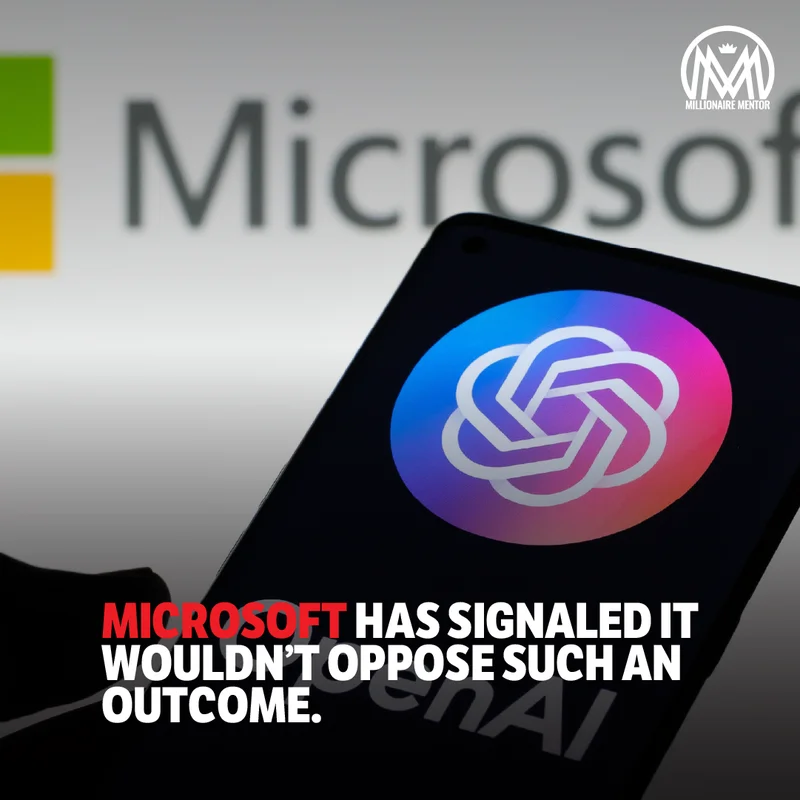
OpenAI's recent move to take an ownership stake in Thrive Holdings, a company incubated by Thrive Capital (one of OpenAI's major investors), raises some interesting questions. On the surface, it’s a smart play: embed your engineering teams directly into companies ripe for AI disruption, accelerate adoption, and get paid based on their success. But digging into the details, the arrangement looks a bit too…circular.
Thrive Holdings, launched in April, buys and operates companies in sectors like accounting and IT services. The idea is to inject AI into their daily operations. OpenAI gets a "meaningful" stake in Thrive Holdings (the exact percentage wasn't disclosed, naturally) in exchange for access to its AI tools, engineers, and research teams. The real kicker? OpenAI gets paid from Thrive's future financial returns. It's performance-based equity, a structure designed to align incentives. But does it *really* align them, or just create a closed loop of value extraction?
OpenAI's "Circularity": A Red Flag or Genius Strategy?
The Circularity Problem
The "circular dealmaking" label is starting to feel less like a description and more like a red flag. OpenAI has already taken stakes in infrastructure partners like AMD and CoreWeave. (Securing compute resources is paramount, after all, and owning a piece of the pie guarantees supply.) This Thrive deal, however, feels different. It's not about securing resources; it's about securing *distribution* and, potentially, *data*.
One source whispered that OpenAI will get access to company data from Thrive’s businesses to help train its AI models. This is where I start to raise an eyebrow. Is OpenAI essentially getting paid to train its models on Thrive's data, then getting *paid again* when those models improve Thrive's bottom line? It's a closed system where OpenAI benefits at every turn, potentially at the expense of other players in the market. And this is the part of the report that I find genuinely puzzling...
Consider the Accenture partnership announced simultaneously. ChatGPT Enterprise will be rolled out to "tens of thousands" of Accenture employees. That's another massive testing ground. Accenture gets access to cutting-edge AI; OpenAI gets real-world deployment data. But Accenture isn't giving up equity. They're paying customers. What makes Thrive so special that it warrants an equity stake?
The official line is that this is about "demonstrating what's possible when frontier AI research and deployment are rapidly deployed across entire organizations." Okay, fair enough. But "demonstrating" doesn't usually require an equity swap. It requires a compelling product and a strong sales team.
Kushner, Capital, and Control: A Question of Fairness?
The Kushner Connection
Let's not forget the elephant in the room: Joshua Kushner, CEO of Thrive Capital and Thrive Holdings, is the brother of Jared Kushner. (Yes, *that* Jared Kushner.) While I try to avoid injecting politics into my analysis, the family ties add another layer of complexity. Is this deal purely driven by business logic, or are there other factors at play? It's impossible to say for sure, but it's a question worth asking.
Thrive Capital poured over $1 billion into OpenAI in late 2024. Since that raise, OpenAI’s valuation has more than tripled. That's a fantastic return on investment, no doubt. But it also means Thrive Capital has a vested interest in seeing OpenAI succeed, even if that success comes at the expense of a level playing field.
OpenAI now has roughly 1 million enterprise customers, including Spotify, Canva, and Zillow. These are impressive names, but they're also tech-savvy companies that likely would have adopted AI regardless of OpenAI's involvement. The real test is whether OpenAI can penetrate the "core to the real economy" sectors that Thrive is targeting. Can they convince accounting firms and IT services companies to fully embrace AI?
The financial terms of the Thrive deal weren't made public, but one person close to the deal said OpenAI didn't put up any cash. Instead, they received a "meaningful" stake in exchange for access to their resources. That's a pretty sweet deal for OpenAI. They get equity without having to spend any capital. It's almost like printing money (or, in this case, printing equity).
OpenAI takes stake in Thrive Holdings to help accelerate enterprise AI adoption
Is OpenAI Building a Monopoly?
OpenAI’s moves are reminiscent of Standard Oil in the late 19th century – controlling not just the product (AI models) but also the means of production (compute) and distribution (Thrive). While not illegal, it raises questions about market fairness and innovation. Will smaller AI startups be able to compete when OpenAI has such a stranglehold on the entire ecosystem? I'm not sure.
The long-term implications of this deal are still unclear. Will it accelerate AI adoption and boost productivity, or will it simply create a closed ecosystem where OpenAI benefits at everyone else's expense? Only time will tell. But one thing is certain: this is a deal worth watching closely.
The "Meaningful" Stake is Meaningfully Opaque